
About this book
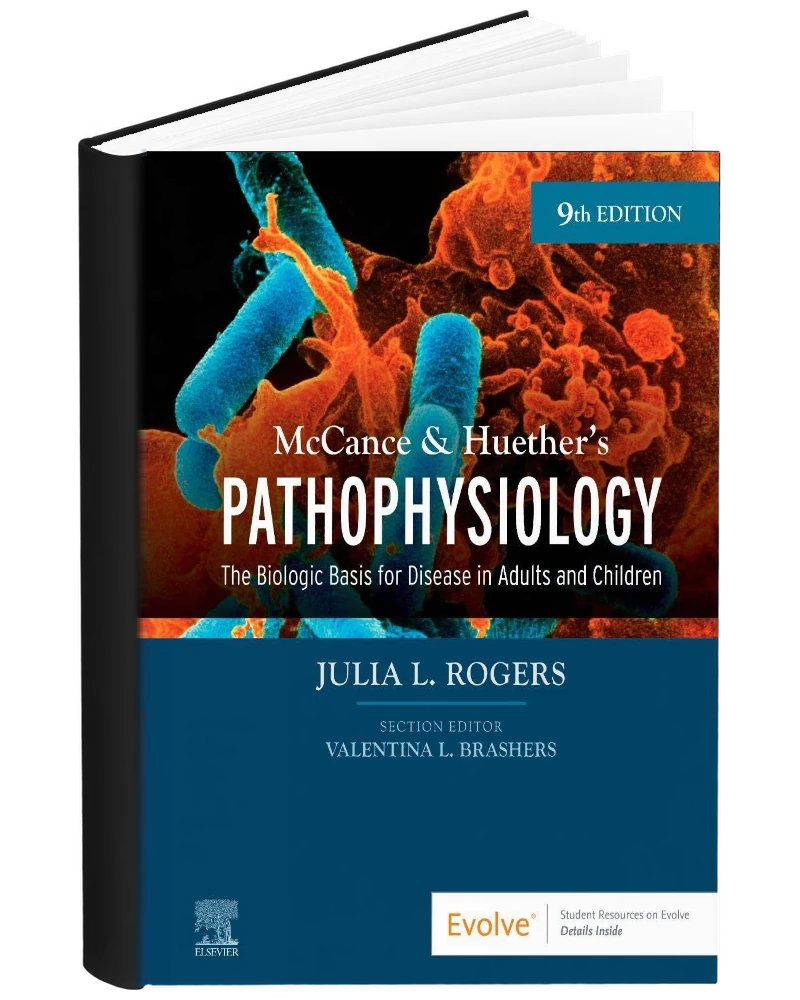
McCance & Huether’s Pathophysiology: The Biologic Basis for Disease in Adults and Children 9th Edition PDF by Julia Rogers is offered here as a PDF eBook. The ninth edition explains the mechanisms that produce disease across the lifespan, linking normal anatomy and physiology with cellular injury, altered function and clinical manifestations. It covers genetics and epigenetics, immunity and inflammation, stress and adaptation, cancer, fluid and electrolyte disorders and dysfunction across the major organ systems. More than 1,300 illustrations and photographs help students visualize the progression from normal structure to disease-related change. The text is especially useful for nursing and advanced-practice students who need to understand the why behind symptoms, laboratory findings and treatment priorities before moving into complex clinical management.
Designed for nursing, advanced practice, and health science students, this edition provides a structured resource for understanding how altered biological processes produce clinical manifestations across the lifespan.
This listing is for the 9th edition of McCance & Huether’s Pathophysiology: The Biologic Basis for Disease in Adults and Children. Check the title, edition, authors/editors, and other product information before ordering if you need the book for a particular course, syllabus, examination, or professional reference.
About McCance & Huether’s Pathophysiology
McCance & Huether’s Pathophysiology develops disease understanding from cells and tissues to complex disturbances across body systems. Cellular biology, the fluid environment, genetics, epigenetics, immunity, and cancer establish its conceptual foundation. System-based units then examine neurologic, endocrine, reproductive, hematologic, cardiovascular, pulmonary, renal, digestive, musculoskeletal, and skin disorders. Pediatric chapters and aging material place these mechanisms within a lifespan context. The ninth edition uses illustrations, disease algorithms, and flowcharts to connect altered function with clinical manifestations, evaluation, and treatment. Its emphasis is explaining the biological basis of illness, giving readers a framework for understanding why particular signs and symptoms occur.
Disease Mechanisms and System-Based Coverage
The 9th edition covers the following areas:
- Cellular and tissue alterations: Explore injury, environmental agents, fluid balance, electrolytes, and acid-base changes.
- Genetics and epigenetics: Connect inherited traits and gene-environment interactions with disease.
- Defense mechanisms: Examine inflammation, wound healing, adaptive immunity, infection, and stress.
- Cancer biology: Study cellular proliferation, epidemiology, and malignancy in younger populations.
- Organ-system dysfunction: Follow disorders through major physiological systems.
- Lifespan differences: Consider pediatric alterations and the influence of aging.
- Multiple interacting systems: Review shock, organ dysfunction, and burns in adults and children.
Why This Text Helps Explain Disease
This textbook is useful when clinical knowledge needs a mechanistic explanation. Instead of stopping at a list of symptoms, readers can connect findings with changes in cells, immune responses, circulation, or other physiological systems. Its foundation-to-systems progression supports advanced nursing coursework where several mechanisms may contribute to one patient problem. The pediatric coverage also helps readers compare disease processes across age groups without assuming that adult patterns always apply. Algorithms and flowcharts give a visual route through progression and relationships. For educators, the breadth of mechanisms makes the book suitable for building explanations that link basic science with clinical manifestations and for revisiting the underlying causes of complex illness.
Who uses this book
- Undergraduate Nursing Students
- Graduate Nursing Students
- Nurse Practitioner Students
- Advanced Practice Registered Nurses
- Health Science Students
- Students Preparing for Pathophysiology Examinations
- Nurses Reviewing Disease Mechanisms
- Pathophysiology Instructors
Also suitable for other health-professions learners who need a detailed explanation of disease mechanisms in adults and children and their relationship to clinical findings.
Key Topics Covered
- Cellular injury
- Fluid and electrolyte disturbances
- Acid-base alterations
- Genetic diseases
- Epigenetics
- Inflammation and wound healing
- Adaptive immunity
- Infection and stress
- Cancer biology
- Neurologic dysfunction
- Hormonal regulation
- Cardiovascular and pulmonary dysfunction
- Renal and urinary tract dysfunction
- Pediatric pathophysiology
- Shock and multiple organ dysfunction
PDF Edition Features
- Searchable reading: Quickly locate names, concepts, conditions, terminology, and other material with a compatible PDF reader.
- Highlighting and notes: Use annotation, bookmarking, and highlighting features supported by your chosen PDF application.
- Flexible access: Read the eBook on compatible computers, tablets, and mobile devices.
- Edition identification: Check the edition and product information before ordering to ensure it matches your requirements.
- Instant access: After successful payment, the download link is available through your order and sent to the email address used at checkout.

Reviews
There are no reviews yet.