
About this book
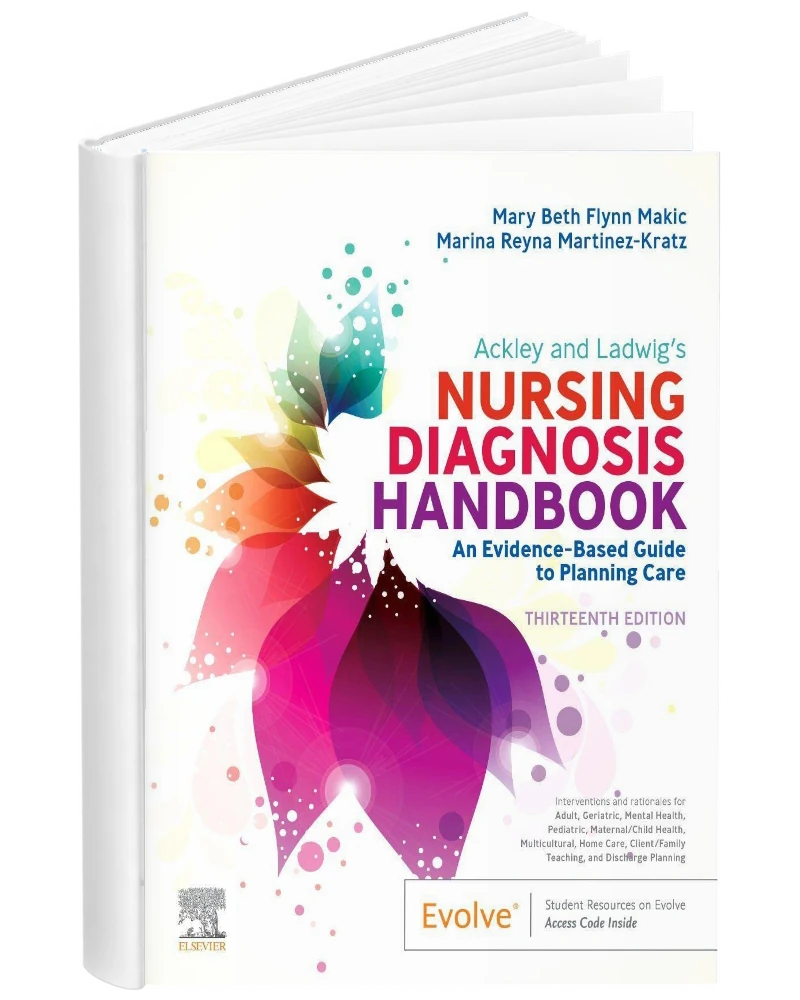
Ackley and Ladwig’s Nursing Diagnosis Handbook: An Evidence-Based Guide to Planning Care 13th Edition PDF edited by Mary Beth Flynn Makic and Marina Reyna Martinez-Kratz is offered here as a PDF eBook. The thirteenth edition is built around a three-step approach that moves from client assessment to nursing diagnosis and individualized care planning. It includes guidance for more than 1,450 client symptoms and clinical situations and connects NANDA International (NANDA-I) nursing diagnoses with Nursing Interventions Classification (NIC) interventions and Nursing Outcomes Classification (NOC) outcomes. Evidence-based rationales, pediatric and geriatric considerations, culturally competent care, home-care guidance and client/family teaching support the planning process. The handbook is especially useful when students need to turn assessment findings into a clear written plan and explain why a diagnosis, expected outcome and intervention belong together rather than treating care planning as a list of disconnected tasks.
Designed for nursing students, registered nurses, clinical instructors, and nurse educators, this edition provides a structured resource for understanding how assessment findings lead to nursing diagnoses, interventions, and measurable outcomes.
This listing is for the 13th edition of Ackley and Ladwig’s Nursing Diagnosis Handbook: An Evidence-Based Guide to Planning Care. Check the title, edition, authors/editors, and other product information before ordering if you need the book for a particular course, syllabus, examination, or professional reference.
Inside the 13th Edition of This Nursing Diagnosis Handbook
Ackley and Ladwig’s Nursing Diagnosis Handbook organizes care planning into a practical route from assessment information to nursing diagnosis and an individualized plan. Its opening section explains nursing diagnosis and the nursing process, followed by a guide linking client symptoms and clinical states to possible diagnoses. The final section presents plans in alphabetical order, including defining characteristics, related or risk factors, outcomes, interventions, and supporting rationales. This arrangement makes the handbook especially relevant when a nursing learner needs to explain the reasoning behind a plan. The thirteenth edition also addresses patient teaching and considerations for pediatric, geriatric, home-care, and culturally responsive nursing contexts.
What You’ll Find in the Care-Planning Sections
The 13th edition covers the following areas:
- Diagnostic reasoning: Linking assessment information with an appropriate nursing diagnosis.
- Symptom-to-diagnosis guidance: Using client symptoms and clinical states to locate possible diagnoses.
- NANDA-I nursing diagnoses: Plans organized around standardized nursing diagnostic terminology.
- NOC outcomes: Suggested outcomes and client-specific goals for evaluating progress.
- NIC interventions: Intervention suggestions alongside explanations of their purpose.
- Evidence and rationales: Research references supporting nursing interventions.
- Individualized care considerations: Pediatric, geriatric, multicultural, and home-care content where relevant.
- Client and family education: Teaching considerations within the care-planning entries.
Using This Handbook to Build a Nursing Care Plan
This handbook is useful for making the reasoning within a nursing care plan explicit. It gives the reader a way to work from observed cues to a diagnostic label, then consider the outcomes and interventions appropriate to that situation. That sequence can support clinical assignments, supervision discussions, and teaching about the nursing process. The rationale accompanying an intervention matters because it helps a student explain why an action belongs in the plan rather than simply copying a list. For practicing nurses, the organized entries provide a reference for reviewing diagnostic language and care-planning options while keeping the individual patient’s needs central to the discussion.
Who uses this book
- Prelicensure Nursing Students
- Bachelor of Science in Nursing (BSN) Students
- Associate Degree in Nursing (ADN) Students
- Practical Nursing Students
- Graduate Nursing Students Reviewing Care Planning
- Registered Nurses (RNs) Developing or Reviewing Care Plans
- Nursing Students Preparing for Clinical Placements
- Nurse Educators and Clinical Instructors
- Students Learning NANDA-I, NIC and NOC Terminology
Also suitable for other nursing trainees seeking a structured, evidence-based guide to assessment, nursing diagnosis, individualized interventions and outcome evaluation.
Key Topics Covered
- Nursing diagnostic reasoning
- NANDA-I terminology
- Defining characteristics
- Related factors
- Risk factors
- Nursing process
- NOC outcome selection
- NIC intervention selection
- Evidence-based nursing rationales
- Individualized care planning
- Geriatric nursing interventions
- Pediatric nursing considerations
- Home-care planning
- Client and family teaching
PDF Edition Features
- Searchable reading: Quickly locate names, concepts, conditions, terminology, and other material with a compatible PDF reader.
- Highlighting and notes: Use annotation, bookmarking, and highlighting features supported by your chosen PDF application.
- Flexible access: Read the eBook on compatible computers, tablets, and mobile devices.
- Edition identification: Check the edition and product information before ordering to ensure it matches your requirements.
- Instant access: After successful payment, the download link is available through your order and sent to the email address used at checkout.


Reviews
There are no reviews yet.