
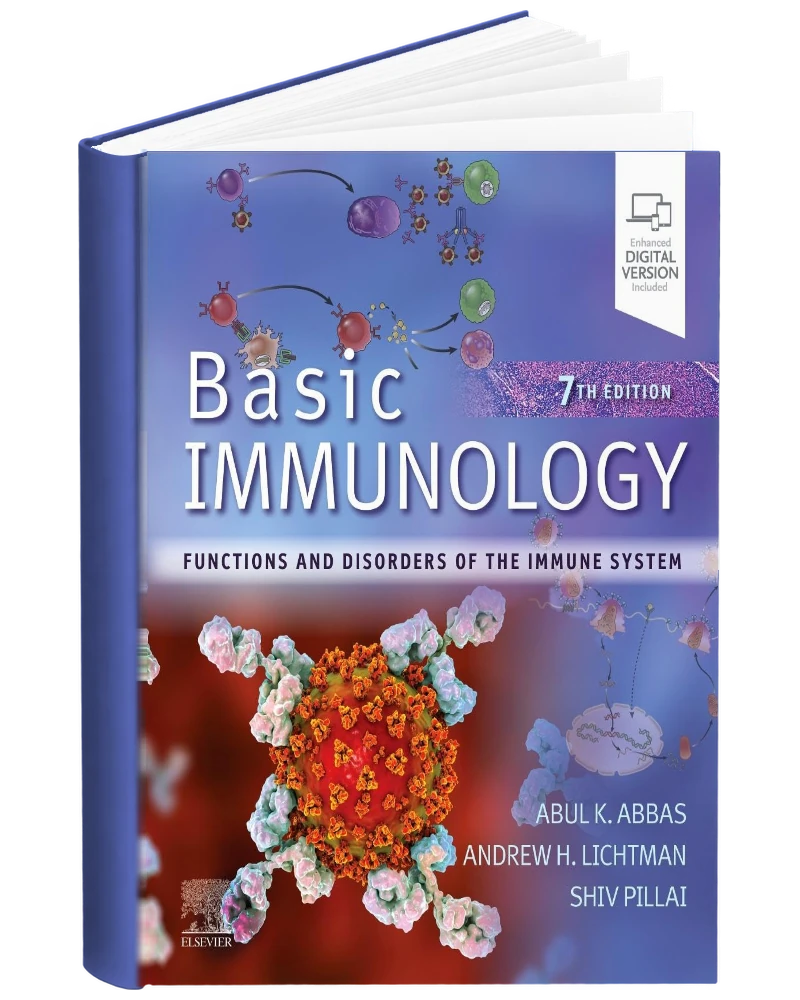
About this book
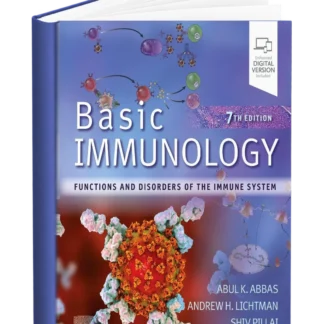
Basic Immunology: Functions and Disorders of the Immune System 7th Edition PDF by Abul K. Abbas, Andrew H. Lichtman, and Shiv Pillai is offered here as a PDF eBook. The seventh edition is a concise introduction to the organization and function of the immune system, written by the same author team responsible for Cellular and Molecular Immunology. It explains innate and adaptive immunity, antigen recognition, lymphocyte activation, effector mechanisms, immunologic tolerance and the major ways immune responses contribute to disease. Clinical cases, summary boxes, review questions, tables and full-color illustrations help students connect cellular and molecular mechanisms with immunodeficiency, hypersensitivity, autoimmunity, transplantation and immunologic therapies. The text is designed to make a complex subject manageable for medical and health-science learners who need a strong conceptual foundation before moving into more detailed immunology or disease-specific study.
Designed for medical students, allied-health students, biology students, and immunology instructors, this edition provides a structured resource for understanding how immune mechanisms relate to protection, disease, and therapeutic approaches.
This listing is for the 7th edition of Basic Immunology: Functions and Disorders of the Immune System. Check the title, edition, authors/editors, and other product information before ordering if you need the book for a particular course, syllabus, examination, or professional reference.
About Basic Immunology, 7th Edition
Basic Immunology connects the protective functions of the immune system with the disorders that occur when those functions fail or become misdirected. Abbas, Lichtman, and Pillai begin with immune-system organization and innate responses, then develop antigen recognition, lymphocyte activation, and effector mechanisms. Later coverage addresses tolerance, autoimmunity, tumor and transplant immunology, hypersensitivity, and immunodeficiency. The seventh edition includes expanded discussion of topics such as COVID-19, vaccines, and immunotherapy. Its concise scope makes the book relevant to introductory biomedical study, where readers need to understand a mechanism before considering its consequences in infection, inflammatory disease, or treatment.
Immune Mechanisms and Their Clinical Connections
The 7th edition covers the following areas:
- Innate immunity: Early immune responses and their role in host protection.
- Antigen presentation and recognition: Major histocompatibility molecules and adaptive recognition.
- T-cell immunity: Activation and the effector functions of T lymphocytes.
- Humoral immunity: Antibody responses and their effector mechanisms.
- Tolerance and autoimmunity: Immune regulation and responses against self.
- Tumors and transplantation: Immune responses in cancer and transplanted tissues.
- Hypersensitivity and immunodeficiency: Immune-mediated injury and impaired immune protection.
- Vaccines and immunotherapy: Edition coverage connecting immune principles with therapeutic approaches.
Connecting Immunologic Mechanisms with Disease
The function of this book is to provide an accessible bridge between immune terminology and an explanation of disease. Knowing the name of an immune cell is only the beginning; learners also need to understand how recognition, activation, and an effector response fit together. Following that sequence helps make sense of the difference between inadequate protection and an immune response that damages tissue. Basic Immunology is therefore useful in courses that connect foundational mechanisms with clinical examples. Readers can use its focused scope to organize questions about infection, autoimmunity, allergy, transplantation, and cancer before turning to more detailed specialty or research references.
Who uses this book
- Medical Students Studying Immunology
- Dental Students
- Physician Assistant (PA) Students
- Nursing and Advanced Practice Students Reviewing Immune Function
- Pharmacy Students
- Biomedical Science and Biology Students
- Graduate Students Beginning Immunology Coursework
- Students Preparing for Immunology Examinations
- Immunology Educators and Course Instructors
Also suitable for other health-science learners who need a concise bridge between normal immune mechanisms and the pathogenesis of immune-mediated disease.
Key Topics Covered
- Innate immune responses
- Antigen presentation
- Major histocompatibility complex
- Adaptive antigen recognition
- T-lymphocyte activation
- T-cell effector mechanisms
- Humoral immune responses
- Antibody effector mechanisms
- Immunologic tolerance
- Autoimmunity
- Tumor immunology
- Transplant immunology
- Hypersensitivity
- Immunodeficiency
- Vaccines and immunotherapy
PDF Edition Features
- Searchable reading: Quickly locate names, concepts, conditions, terminology, and other material with a compatible PDF reader.
- Highlighting and notes: Use annotation, bookmarking, and highlighting features supported by your chosen PDF application.
- Flexible access: Read the eBook on compatible computers, tablets, and mobile devices.
- Edition identification: Check the edition and product information before ordering to ensure it matches your requirements.
- Instant access: After successful payment, the download link is available through your order and sent to the email address used at checkout.
Reviews
There are no reviews yet.