
About this book
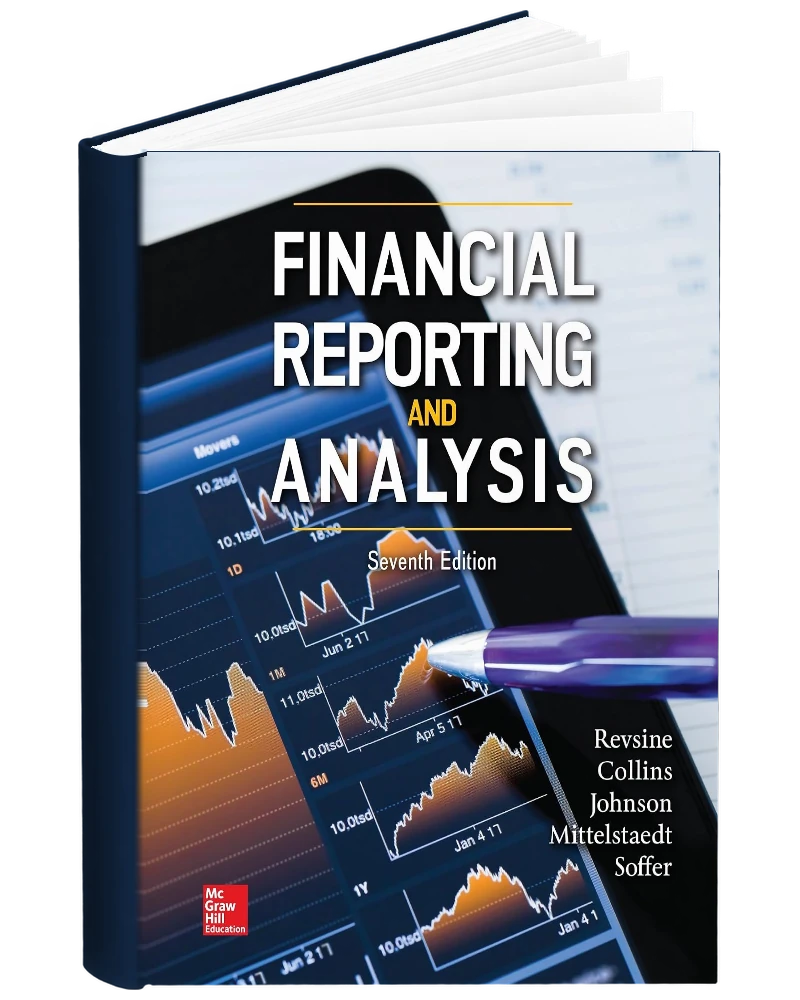
Financial Reporting and Analysis 7th Edition PDF by Lawrence Revsine, Daniel W. Collins, W. Bruce Johnson, H. Fred Mittelstaedt & Leonard C. Soffer is offered here as a PDF eBook. The seventh edition develops the skills needed to interpret corporate financial reporting and use financial statements for valuation, credit analysis and performance assessment. It connects accrual accounting and income measurement with revenue recognition, balance-sheet structure, cash flows, receivables, inventories, long-lived assets, liabilities, leases, income taxes, pensions, equity, investments, foreign operations and derivatives. Rather than treating accounting rules as isolated procedures, the text emphasizes how reporting choices affect the conclusions reached by analysts, lenders, investors and managers. Its combination of accounting mechanics and analytical interpretation makes it especially useful for accounting and finance students who need to understand both how reported numbers are produced and how those numbers should be evaluated.
Designed for accounting students, MBA students, and readers analyzing corporate financial statements, this edition provides a structured resource for understanding how reporting choices affect the financial information used in business evaluation.
This listing is for the 7th edition of Financial Reporting and Analysis. Check the title, edition, authors/editors, and other product information before ordering if you need the book for a particular course, syllabus, examination, or professional reference.
About Financial Reporting and Analysis, Seventh Edition
Financial Reporting and Analysis examines how financial information is produced and how readers use it. The seventh edition begins with reporting institutions, accrual accounting, income determination, and the structure of financial statements. It then connects statement analysis with valuation, credit risk, and contracting before examining individual reporting areas. These include receivables, inventories, long-lived assets, financial instruments, leases, taxes, retirement benefits, owners’ equity, and intercorporate investments. A dedicated cash-flow chapter completes the main sequence. This combination places accounting treatments within the broader questions analysts ask about a company’s performance, financing, and reported financial position.
Reporting Topics and Analytical Applications
The 7th edition covers the following areas:
- Reporting environment and accrual income: Examine the setting for reporting and the determination of accounting income.
- Financial statements: Study balance-sheet structure and cash-flow presentation.
- Analysis, valuation, and credit risk: Connect financial information with business evaluation.
- Reporting and contracting: Consider the use of accounting information in contractual relationships.
- Assets: Review receivables, inventories, and long-lived assets.
- Liabilities and related reporting: Explore financial instruments, leases, taxes, and retirement benefits.
- Equity and investments: Examine owners’ equity and intercorporate equity investments.
Interpreting the Consequences of Accounting Choices
The text is useful for readers who need to move between preparing accounting information and interpreting what it communicates. Its early analytical chapters provide a reason to care about the later asset, liability, and equity treatments: reporting choices influence the measures used to compare performance and assess risk. Students can use that connection to explain the economic meaning of a treatment alongside its mechanics. For an accounting or MBA course, the combination supports discussion of valuation, credit assessment, and contractual uses of financial information. The seventh edition’s topic sequence also provides a clear basis for matching assignments to a syllabus.
Who uses this book
- Financial Accounting Students
- Finance Students
- MBA Students Studying Corporate Reporting
- Students Taking Financial Statement Analysis
- Accounting Majors Preparing for Advanced Reporting Courses
- Equity and Credit Analysis Students
- Professionals Reviewing Corporate Financial Statements
- Accounting and Finance Instructors
- Learners Studying Valuation and Credit Risk Through Financial Information
Also suitable for analysts and business professionals who need to connect accounting choices, financial statements, valuation and corporate-performance assessment.
Key Topics Covered
- Accrual accounting
- Income determination
- Balance-sheet structure
- Financial statement analysis
- Valuation and credit risk
- Accounting information in contracting
- Receivables
- Inventory accounting
- Long-lived assets
- Financial instruments and liabilities
- Lease accounting
- Income tax reporting
- Pensions and postretirement benefits
- Owners’ equity and intercorporate investments
- Statement of cash flows
PDF Edition Features
- Searchable reading: Quickly locate names, concepts, conditions, terminology, and other material with a compatible PDF reader.
- Highlighting and notes: Use annotation, bookmarking, and highlighting features supported by your chosen PDF application.
- Flexible access: Read the eBook on compatible computers, tablets, and mobile devices.
- Edition identification: Check the edition and product information before ordering to ensure it matches your requirements.
- Instant access: After successful payment, the download link is available through your order and sent to the email address used at checkout.


Reviews
There are no reviews yet.