Posted on — Leave a comment

Internal Medicine Books: Harrison’s, Pocket Guides and Clinical References

2026 Internal Medicine textbook guide

Internal medicine references serve very different jobs: a comprehensive textbook builds deep disease understanding, a ward handbook supports fast bedside lookup, an annual diagnosis-and-treatment reference emphasizes current management, and a specialty text goes deep into one organ system. This guide compares those roles so students, residents and clinicians can choose by use case instead of assuming the biggest book is always the best choice.

An internal medicine physician in a white coat reviewing a tablet at a clean consultation desk with a stethoscope

Editorially reviewed: October 6, 2026. Recommendations are based on the current KINDLEIT catalog, exact-edition product records and publisher/catalog information.

Which internal medicine books are best for which job?

Book Best for Why choose it Edition note
Harrison’s Principles of Internal Medicine 22nd edition Medical students, residents and physicians needing a comprehensive core reference Choose it for deep pathophysiology, broad disease coverage and specialist-level explanations across internal medicine. Use the exact edition named by your program when page references or updated disease chapters matter.
Pocket Medicine 9th edition Ward rounds, interns and residents Best when fast retrieval, concise differential diagnosis and practical inpatient management matter more than textbook depth. Newer handbook editions are more important when you want current drug, diagnostic and management summaries.
Current Medical Diagnosis and Treatment 2025 Clinicians and students who want a current annual clinical reference Strong for practical diagnosis and treatment updates across common adult medical problems. Because it is annual, year matters more here than for slower-changing foundational texts.
Brenner & Rector’s The Kidney 12th edition Nephrology trainees and advanced internal-medicine readers Choose it when you need specialist renal depth rather than a broad general-medicine survey. Best used when nephrology is the actual study or clinical focus.

Who should choose what?

  • Preclinical or early clinical medical student: Harrison’s gives the broadest foundation, but use a lighter handbook for rapid revision.
  • Intern or resident on wards: Pocket Medicine is usually the faster day-to-day companion.
  • Clinician wanting annual management updates: CMDT is more practical than a large reference for quick current review.
  • Specialty trainee: move from a general text into organ-specific references such as Brenner & Rector’s when the specialty requires depth.

How to avoid buying redundant medicine references

Pair one deep reference with one rapid-use resource. Harrison’s plus Pocket Medicine covers two different jobs; Harrison’s plus another broad general-medicine textbook may create more overlap. Add specialty references only when the rotation, fellowship or course requires them.

How much does the edition matter?

Edition changes matter most for treatment guidance, classifications, drug information and rapidly evolving specialties. If a syllabus specifies an edition, follow it. For annual references such as CMDT, the publication year is itself part of the product’s value.

Decision rule: match the syllabus first, then choose by use case: depth, ward speed, annual update or specialty focus.

Browse current Internal Medicine titles

View all Internal Medicine titles → · Cardiology guide · Respiratory Medicine guide

Sources and editorial method

Edition and scope checks use current KINDLEIT product records and authoritative publisher/catalog information. Publisher links are provided for transparency and do not imply affiliation.

Last editorial update: October 6, 2026. Confirm the exact title and edition on each product page before purchase.

Posted on — Leave a comment

Psychiatry & Mental Health Books: Clinical, Nursing and Psychopharmacology Guides

2026 Psychiatry & Mental Health textbook guide

Psychiatry & Mental Health textbooks and references are easiest to choose when the book matches the exact job you need it to do. For medical students, nursing students, psychiatry trainees, counselors, and mental-health professionals, that usually means deciding whether you need a comprehensive core text, a concise review book, a visual reference, or a practical handbook. This guide organizes the main choices around psychiatric assessment, interviewing, mental-health nursing, diagnosis, and psychopharmacology.
A psychiatrist study desk with a realistic small brain teaching model, notebook and reference books in a calm consultation room

Recommended Psychiatry & Mental Health titles and textbook families to compare

High-intent textbook searches are often title-specific, so compare established references before choosing an edition. Confirm the edition, course requirement, and scope on the individual product page.

How to choose the right Psychiatry & Mental Health textbook

Choose a comprehensive textbook when you need a course-long reference or explanations that connect topics in sequence. Choose a review book for faster revision, exam preparation, or repeated recall. Visual references are strongest when recognition matters; handbooks work best for concise lookup during placement, clinical study, or professional review.

For digital study, searchability matters. A searchable PDF makes it easier to locate terminology, revisit difficult chapters, compare related concepts, and build a study routine around bookmarks, highlights, and notes.

Check the edition before you buy

Edition differences can affect chapter order, terminology, guidelines, tables, examples, and page references. If a syllabus or workplace specifies an edition, match that requirement first. Otherwise compare the publication year and major changes before deciding.

Study tip: pair one main reference with one faster review resource. The main text builds understanding; the shorter resource helps you retrieve and test what you have learned.

Browse the full Psychiatry & Mental Health collection

View all Psychiatry & Mental Health titles → or browse the full KINDLEIT medical textbook library.

Posted on — Leave a comment

Statistics & Research Books for Health and Behavioral Sciences

2026 Statistics & Research textbook guide

Statistics & Research textbooks and references are easiest to choose when the book matches the exact job you need it to do. For health-science students, psychology students, researchers, and evidence-based practice learners, that usually means deciding whether you need a comprehensive core text, a concise review book, a visual reference, or a practical handbook. This guide organizes the main choices around statistics, study design, data interpretation, research methods, and evidence appraisal.
Diverse health researchers collaborating on an analysis workstation with charts and study notes

Recommended Statistics & Research titles and textbook families to compare

High-intent textbook searches are often title-specific, so compare established references before choosing an edition. Confirm the edition, course requirement, and scope on the individual product page.

How to choose the right Statistics & Research textbook

Choose a comprehensive textbook when you need a course-long reference or explanations that connect topics in sequence. Choose a review book for faster revision, exam preparation, or repeated recall. Visual references are strongest when recognition matters; handbooks work best for concise lookup during placement, clinical study, or professional review.

For digital study, searchability matters. A searchable PDF makes it easier to locate terminology, revisit difficult chapters, compare related concepts, and build a study routine around bookmarks, highlights, and notes.

Check the edition before you buy

Edition differences can affect chapter order, terminology, guidelines, tables, examples, and page references. If a syllabus or workplace specifies an edition, match that requirement first. Otherwise compare the publication year and major changes before deciding.

Study tip: pair one main reference with one faster review resource. The main text builds understanding; the shorter resource helps you retrieve and test what you have learned.

Browse the full Statistics & Research collection

View all Statistics & Research titles → or browse the full KINDLEIT medical textbook library.

Posted on — Leave a comment

Counseling & Psychotherapy Books: Theory, Skills and Clinical Practice

2026 Counseling & Psychotherapy textbook guide

Counseling & Psychotherapy textbooks and references are easiest to choose when the book matches the exact job you need it to do. For counseling students, psychology students, therapists in training, and helping professionals, that usually means deciding whether you need a comprehensive core text, a concise review book, a visual reference, or a practical handbook. This guide organizes the main choices around counseling theory, therapeutic skills, case formulation, ethics, and clinical practice.
Therapist and client speaking in a warm counseling room

Recommended Counseling & Psychotherapy titles and textbook families to compare

High-intent textbook searches are often title-specific, so compare established references before choosing an edition. Confirm the edition, course requirement, and scope on the individual product page.

How to choose the right Counseling & Psychotherapy textbook

Choose a comprehensive textbook when you need a course-long reference or explanations that connect topics in sequence. Choose a review book for faster revision, exam preparation, or repeated recall. Visual references are strongest when recognition matters; handbooks work best for concise lookup during placement, clinical study, or professional review.

For digital study, searchability matters. A searchable PDF makes it easier to locate terminology, revisit difficult chapters, compare related concepts, and build a study routine around bookmarks, highlights, and notes.

Check the edition before you buy

Edition differences can affect chapter order, terminology, guidelines, tables, examples, and page references. If a syllabus or workplace specifies an edition, match that requirement first. Otherwise compare the publication year and major changes before deciding.

Study tip: pair one main reference with one faster review resource. The main text builds understanding; the shorter resource helps you retrieve and test what you have learned.

Browse the full Counseling & Psychotherapy collection

View all Counseling & Psychotherapy titles → or browse the full KINDLEIT medical textbook library.

Posted on — Leave a comment

MRI & Medical Imaging Books: A Guide to Choosing the Right Reference

2026 MRI & Medical Imaging textbook guide

MRI & Medical Imaging textbooks and references are easiest to choose when the book matches the exact job you need it to do. For radiography students, MRI trainees, imaging professionals, and health-science learners, that usually means deciding whether you need a comprehensive core text, a concise review book, a visual reference, or a practical handbook. This guide organizes the main choices around MRI principles, sectional anatomy, image interpretation, and imaging technique.
A contemporary MRI scanner in a spotless calm hospital room, with a radiographer at a discreet console

Recommended MRI & Medical Imaging titles and textbook families to compare

High-intent textbook searches are often title-specific, so compare established references before choosing an edition. Confirm the edition, course requirement, and scope on the individual product page.

How to choose the right MRI & Medical Imaging textbook

Choose a comprehensive textbook when you need a course-long reference or explanations that connect topics in sequence. Choose a review book for faster revision, exam preparation, or repeated recall. Visual references are strongest when recognition matters; handbooks work best for concise lookup during placement, clinical study, or professional review.

For digital study, searchability matters. A searchable PDF makes it easier to locate terminology, revisit difficult chapters, compare related concepts, and build a study routine around bookmarks, highlights, and notes.

Check the edition before you buy

Edition differences can affect chapter order, terminology, guidelines, tables, examples, and page references. If a syllabus or workplace specifies an edition, match that requirement first. Otherwise compare the publication year and major changes before deciding.

Study tip: pair one main reference with one faster review resource. The main text builds understanding; the shorter resource helps you retrieve and test what you have learned.

Browse the full MRI & Medical Imaging collection

View all MRI & Medical Imaging titles → or browse the full KINDLEIT medical textbook library.

Posted on — 1 Comment

Anatomy & Physiology Textbooks: Atlases, Physiology Texts & Study Guides

2026 Anatomy & Physiology textbook guide

Anatomy & Physiology textbooks and references are easiest to choose when the book matches the exact job you need it to do. For medical, nursing, allied-health, anatomy lab, and physiology students, that usually means deciding whether you need a comprehensive core text, a concise review book, a visual reference, or a practical handbook. This guide organizes the main choices around visual identification, regional anatomy, physiology mechanisms, lab study, and clinical correlation.
A refined anatomy study desk with a realistic anatomical torso teaching model, skeleton model in background and open unlettered reference book

Recommended Anatomy & Physiology titles and textbook families to compare

High-intent textbook searches are often title-specific, so compare established references before choosing an edition. Confirm the edition, course requirement, and scope on the individual product page.

How to choose the right Anatomy & Physiology textbook

Choose a comprehensive textbook when you need a course-long reference or explanations that connect topics in sequence. Choose a review book for faster revision, exam preparation, or repeated recall. Visual references are strongest when recognition matters; handbooks work best for concise lookup during placement, clinical study, or professional review.

For digital study, searchability matters. A searchable PDF makes it easier to locate terminology, revisit difficult chapters, compare related concepts, and build a study routine around bookmarks, highlights, and notes.

Check the edition before you buy

Edition differences can affect chapter order, terminology, guidelines, tables, examples, and page references. If a syllabus or workplace specifies an edition, match that requirement first. Otherwise compare the publication year and major changes before deciding.

Study tip: pair one main reference with one faster review resource. The main text builds understanding; the shorter resource helps you retrieve and test what you have learned.

Browse the full Anatomy & Physiology collection

View all Anatomy & Physiology titles → or browse the full KINDLEIT medical textbook library.

Posted on — Leave a comment

The Complete Guide to Nursing Textbooks & Clinical References (2026 Edition)

2026 nursing textbook buying guide

For nursing students, NCLEX-RN candidates, clinical trainees, and working nurses. This guide helps you separate exam-review books from comprehensive course texts, medication references, and fast clinical handbooks so you can choose the right resource without buying several books that do the same job.

Three diverse nursing students practicing patient assessment in a clinical simulation lab

At a glance

Four nursing books for four different jobs

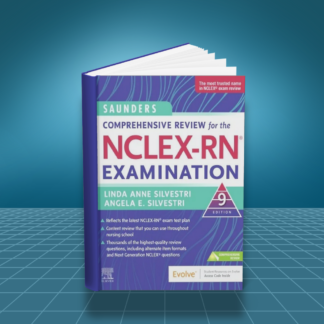
Saunders Comprehensive Review for the NCLEX-RN Examination 9th edition

Best fit: NCLEX-RN reviewSaunders Comprehensive Review for the NCLEX-RN Examination, 9th EditionPractice-focused exam review with rationales and a broad content refresher.View book →
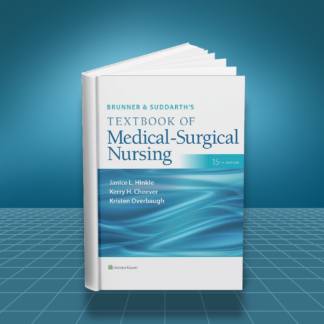
Brunner and Suddarths Textbook of Medical Surgical Nursing 15th edition

Best fit: core med-surgBrunner & Suddarth’s Textbook of Medical-Surgical Nursing, 15th EditionA comprehensive course reference for adult health and medical-surgical nursing.View book →
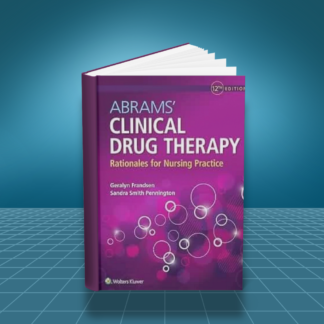
Abrams Clinical Drug Therapy Rationales for Nursing Practice 12th edition

Best fit: pharmacologyAbrams’ Clinical Drug Therapy: Rationales for Nursing Practice, 12th EditionMedication-focused explanations that connect pharmacology with nursing decisions.View book →
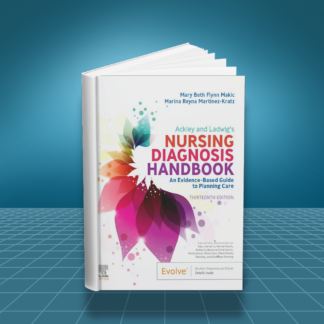
Ackley and Ladwigs Nursing Diagnosis Handbook 13th edition

Best fit: care planningAckley & Ladwig’s Nursing Diagnosis Handbook, 13th EditionA practical reference for nursing diagnoses, outcomes, interventions, and care plans.View book →

Choose by study goal

Build your nursing library around the job you need the book to do

01

NCLEX-RN & licensure review

Prioritize current exam-style questions, clear rationales, broad content review, and a structure that lets you identify weak areas quickly. Review books are strongest when you actively answer questions rather than read passively.

See the NCLEX pick →

02

Core medical-surgical & fundamentals

For semester-long courses, choose a comprehensive text with enough depth to connect assessment, pathophysiology, interventions, patient education, and evidence-based care across body systems.

See the core-text pick →

03

Pharmacology & drug guides

Separate a teaching textbook from a quick drug reference. A pharmacology text explains mechanisms and nursing implications; a drug guide is designed for faster lookup of medications, cautions, and administration details.

See the pharmacology pick →

04

Clinical handbooks & diagnostic reference

During care-planning assignments or clinical placement, concise handbooks are more useful than carrying a full course text. Look for rapid navigation, practical organization, and direct links from assessment findings to nursing actions.

See the clinical-reference pick →

Comparison matrix

Compare the four recommendations side by side

Book Primary focus Best level / use Notable strength Price
Saunders Comprehensive Review, 9e NCLEX-RN preparation Licensure review Practice questions and rationales $34.49
Brunner & Suddarth’s, 15e Medical-surgical nursing Core coursework / clinical study Comprehensive adult-health coverage $34.49
Abrams’ Clinical Drug Therapy, 12e Nursing pharmacology Coursework / medication review Drug therapy linked to nursing rationales $34.49
Ackley & Ladwig’s, 13e Nursing diagnosis & care plans Assignments / clinical rotations Fast care-planning reference $34.49

Buyer’s guide

4 things to check before you buy

1. Edition recency

If your syllabus names a specific edition, match it. For pharmacology, clinical guidance, and exam preparation, newer editions may matter more because terminology, recommendations, and test formats can change.

2. Digital format features

KINDLEIT sells digital PDF editions. Searchability can make a large reference substantially easier to use because you can locate terms, chapters, tables, and repeated concepts without relying only on the index.

3. Companion access

Do not assume a digital textbook automatically includes publisher websites, access codes, adaptive quizzes, or online test banks. Check the individual product description for exactly what is included.

4. Curriculum alignment

The “best” nursing book is the one that matches the course objective. A licensure review book, a med-surg text, a drug reference, and a care-planning handbook solve different problems and should not be treated as substitutes.

Questions students ask

Nursing textbook FAQ

Do I need the latest edition for NCLEX-RN prep?

Use a current review resource when possible, especially when exam format, terminology, or tested guidance has changed. If your school or instructor requires a specific edition, follow that requirement first.

What is the difference between a nursing textbook and a clinical handbook?

A textbook teaches a subject in depth and is usually organized for a full course. A clinical handbook is designed for faster lookup during assignments, placements, or focused review.

Should I buy both a med-surg textbook and an NCLEX review book?

They serve different purposes. A med-surg text builds detailed understanding; an NCLEX review book helps you retrieve that knowledge under exam-style conditions. Many students use one comprehensive text alongside one focused review resource.

How do KINDLEIT digital eBooks work?

Product pages identify the title and edition sold as a digital PDF. Confirm the edition before purchase. Order and file-access details are provided during the purchase flow and in the KINDLEIT FAQs.

27 nursing titles in the current collection

Explore the complete Nursing collection.

Compare additional nursing references, editions, and study resources in one place.

Browse all Nursing titles →

Posted on — 1 Comment

Gray’s Anatomy Books Compared: Students vs Review vs Basic vs Atlas

If you are choosing between the major Gray’s Anatomy study books, the most important question is not which title is “best” in general. It is what job you need the book to do: teach anatomy from the ground up, test you before an exam, give you a faster high-yield overview, or act as a visual atlas.

Our Gray’s Anatomy recommendations

If you can buy only one: choose Gray’s Anatomy for Students if you are taking a full medical or health-science anatomy course. It is the most complete teaching resource of the four.

Gray’s Anatomy books compared at a glance

Book Best for Main strength Main limitation
Gray’s Anatomy for Students 5th Ed. Primary course study Full explanations + strong illustrations More time-consuming than a review book
Gray’s Anatomy Review 3rd Ed. Exam preparation 1,400+ questions with rationales Not a substitute for learning anatomy from scratch
Gray’s Basic Anatomy 3rd Ed. Efficient core review Concise and clinically focused Less depth than the full student text
Gray’s Atlas of Anatomy 3rd Ed. Visual learning and lab work Large, clinically focused illustrations Not designed to replace explanatory textbook reading

1. Best overall: Gray’s Anatomy for Students 5th Edition

Our recommendation: this is the strongest first choice for most medical students and other learners who need a complete anatomy textbook rather than a revision aid.

Elsevier describes Gray’s Anatomy for Students, 5th Edition as a concise, readable anatomy text focused on the core information medical students need. The edition is edited by Richard L. Drake, A. Wayne Vogl and Adam W. M. Mitchell and contains more than 1,000 original illustrations, conceptual overviews and simplified schematic drawings designed to make complex anatomy easier to understand.

Why we recommend it

  • It teaches rather than just tests. You get enough explanation to understand relationships between structures, not merely memorize labels.
  • The visual program is a major strength. Anatomy is spatial, so high-quality illustrations matter.
  • It works well as the “main book.” You can use a review book or atlas alongside it instead of trying to force one resource to do everything.
  • It covers the major regions you expect in a medical anatomy course: back, thorax, abdomen, pelvis and perineum, limbs, head and neck, and neuroanatomy.

Who should buy it?

Choose this if you are beginning a serious anatomy course, want one main reference for the semester, or need explanations that connect structures with clinical context.

Who might skip it?

If you already know the material and your only goal is rapid exam drilling, this may be more book than you need. In that case, Gray’s Anatomy Review is more efficient.

Access Gray’s Anatomy for Students 5th Edition →

2. Best for exams: Gray’s Anatomy Review 3rd Edition

Our recommendation: choose this when your foundation is already in place and you need to convert knowledge into exam performance.

Elsevier positions Gray’s Anatomy Review, 3rd Edition as a question-based review resource for in-course examinations and USMLE-style preparation. It contains more than 1,400 high-yield questions with answers and rationales, including a neuroanatomy chapter with roughly 100 additional questions.

Why we recommend it

  • Active recall is built into the format. You are forced to retrieve the answer rather than simply reread a paragraph.
  • Rationales make mistakes useful. A missed question tells you exactly what needs another pass.
  • It pairs naturally with the main student text. Study a body region, then test yourself on that same region.
  • It is more efficient near exams. Question practice often gives clearer feedback than passive rereading.

Who should buy it?

Medical students preparing for anatomy exams, learners using question-based study, and anyone who already owns a primary anatomy textbook.

Who should not use it as their only book?

Beginners who still need detailed explanations. A question bank can expose a knowledge gap, but it cannot always teach the underlying anatomy as clearly as a full text.

Access Gray’s Anatomy Review 3rd Edition →

3. Best compact option: Gray’s Basic Anatomy 3rd Edition

Our recommendation: this is the most sensible Gray’s title for learners who want a shorter, more efficient anatomy text without moving all the way down to a pure review book.

Elsevier describes Gray’s Basic Anatomy, 3rd Edition as a concise, easy-to-read anatomy text with strong clinical focus, full-color illustrations and integration with imaging and surface anatomy. Its intended readership includes medical students, physician-assistant students and allied-health learners.

Why we recommend it

  • Less intimidating than a full-length anatomy text.
  • Good for health-science programs that do not require maximum depth.
  • Clinical examples help keep the anatomy relevant.
  • Useful when time is limited. You can cover the core concepts without spending as long on every region.

Who should buy it?

Allied-health students, PA students, nursing or rehabilitation learners who need anatomy depth beyond a basic A&P book, and medical students who prefer a more concise secondary text.

Who might prefer the full Students edition?

If anatomy is a major foundational course in your program and you want more explanation and depth, Gray’s Anatomy for Students is still the stronger primary investment.

Access Gray’s Basic Anatomy 3rd Edition →

4. Best visual atlas: Gray’s Atlas of Anatomy 3rd Edition

Our recommendation: choose the Atlas if your biggest difficulty is identifying structures visually, understanding spatial relationships, or preparing for dissection and practical exams.

Elsevier describes Gray’s Atlas of Anatomy, 3rd Edition as the companion resource to Gray’s Anatomy for Students, with clinically focused illustrations that show anatomical structures alongside clinical images and surface anatomy.

Why we recommend it

  • Strong for visual learners.
  • Useful in dissection and practical-exam preparation.
  • Pairs well with explanatory reading. Read the concept in the textbook, then use the atlas to reinforce the visual relationships.
  • Clinical-image correlation helps bridge textbook anatomy and real imaging.

Who should buy it?

Students preparing for anatomy lab practicals, learners who struggle with spatial relationships, and anyone who wants a dedicated visual companion.

Who should not rely on it alone?

An atlas shows anatomy exceptionally well, but it is not the strongest stand-alone resource for explaining every concept in depth. Pair it with a teaching text.

Access Gray’s Atlas of Anatomy 3rd Edition →

Best Gray’s Anatomy combination for different students

Medical student taking anatomy for the first time

Recommended combination: Gray’s Anatomy for Students + Gray’s Anatomy Review.

Use the main text to learn each region, then use Review to test it. This gives you both understanding and retrieval practice.

Student preparing for a practical anatomy exam

Recommended combination: Gray’s Anatomy for Students + Gray’s Atlas of Anatomy.

The textbook gives the explanation; the atlas reinforces structure identification and spatial relationships.

Student with limited study time

Recommended combination: Gray’s Basic Anatomy + Gray’s Anatomy Review.

You get a more concise core text and a strong question-based review tool without committing to the full-length Students edition.

Allied-health learner

Recommended starting point: Gray’s Basic Anatomy.

It offers a clinically relevant foundation without assuming that every learner needs the same depth as a full medical anatomy curriculum.

What we would buy if choosing only one

For most medical students, our single-book recommendation is Gray’s Anatomy for Students, 5th Edition. It is the one title in this group that can most realistically serve as your main anatomy textbook.

If you already have another primary anatomy book and simply want to improve exam performance, buy Gray’s Anatomy Review, 3rd Edition instead.

If visual identification is your weakest area, add Gray’s Atlas of Anatomy. If the full student text feels too detailed for your program, choose Gray’s Basic Anatomy.

How to use these books efficiently

  1. Learn the region: read the relevant chapter in Students or Basic Anatomy.
  2. Draw or label structures from memory: do not keep the page open while recalling.
  3. Check the atlas: compare your mental map with a clear visual reference.
  4. Test yourself: work through Review questions for the same region.
  5. Return only to weak areas: avoid rereading chapters you already understand.

Final recommendation

The Gray’s titles are strongest when you choose by function rather than by name recognition:

  • Need one main textbook? Gray’s Anatomy for Students.
  • Need exam questions? Gray’s Anatomy Review.
  • Need a shorter core text? Gray’s Basic Anatomy.
  • Need visual identification? Gray’s Atlas of Anatomy.

For a wider comparison beyond the Gray’s series, read the KINDLEIT Anatomy & Physiology textbook guide or browse the Anatomy & Physiology collection.


Editorial method: recommendations are based on each title’s intended use, publisher-described features and the study task it is best suited to. Publisher information was checked against Elsevier’s official title pages.